
For many patients, the idea of wisdom teeth extractions brings up more questions than answers. What exactly happens during the procedure? Will it hurt? How long does it take? These are completely reasonable things to want to know before you sit in the chair. As a dentist, I find that patients who understand the process ahead of time feel far less anxious and far more prepared. This guide walks you through the full extraction experience with Westney North Dental in Ajax, from your initial consultation through to the moment you head home to recover.
Why Wisdom Teeth Often Need to Be Removed
Wisdom teeth are the third molars, the last teeth to develop and erupt, usually between the ages of 17 and 25. Many people do not have enough room in their jaw to accommodate them properly. When this happens, the teeth can become impacted, meaning they are blocked from fully emerging through the gum line.
Impacted wisdom teeth can cause pain, infection, crowding of nearby teeth, and damage to adjacent roots. Even wisdom teeth that erupt fully can be difficult to clean and prone to decay. For these reasons, wisdom teeth extractions are one of the most common oral surgery procedures performed in dental offices across Canada.
Not everyone needs their wisdom teeth removed. Some patients have enough space and experience no complications. A thorough assessment is always the starting point.
Step One: The Consultation and Assessment
Before any extraction takes place, your dental team will conduct a full evaluation. At Westney North Dental in Ajax, this begins with a clinical exam and dental X-rays, typically a panoramic X-ray that shows all four wisdom teeth and their position in the jaw.
The X-ray reveals several important things. It shows whether the teeth are impacted or erupted, the angle at which they are positioned, their proximity to nearby teeth and nerves, and the depth at which they sit in the bone. All of this information shapes the treatment plan.
Your dentist will also review your medical history during this appointment. Certain medications, medical conditions, and clotting concerns need to be addressed before surgery. This is the time to share your full medication list and ask any questions you have about the procedure.
By the end of the consultation, you will have a clear picture of how many teeth are being removed, what technique will be used, which anaesthesia option is most appropriate for your case, and what the recovery will likely involve.
Step Two: Preparing for Your Extraction Day
Once your appointment is booked, your dental team will give you specific pre-operative instructions. These vary depending on the anaesthesia option chosen, but general guidelines typically include the following.
If you are receiving local anaesthesia only, you can usually eat and drink normally before the appointment. If sedation is involved, you will be asked to fast for several hours beforehand, typically nothing to eat or drink after midnight the evening before. You will also need to arrange a ride home, as you will not be in a condition to drive after sedation.
Wearing comfortable, loose-fitting clothing is recommended. Avoid wearing nail polish or contact lenses if IV sedation is planned, as these can interfere with monitoring equipment. Leave jewellery and valuables at home.
Step Three: Anaesthesia Options
This is one of the most important aspects of the experience. The right anaesthesia choice depends on the complexity of the extraction, the number of teeth being removed, your anxiety level, and your overall health.
Local Anaesthesia
Local anaesthesia is the most common option for straightforward wisdom teeth extractions. A numbing injection is administered to the area around the tooth. You remain fully awake throughout the procedure. You will feel pressure and movement, but you should not feel sharp pain. Local anaesthesia is highly effective and wears off within a few hours after the appointment.
Nitrous Oxide (Laughing Gas)
Nitrous oxide is a mild sedative inhaled through a small mask placed over the nose. It reduces anxiety and creates a relaxed, slightly euphoric feeling without putting you to sleep. You remain conscious and able to respond. Nitrous oxide wears off quickly, often within minutes of removing the mask, which means most patients can drive home after the appointment. It is often combined with local anaesthesia for patients who are mildly anxious.
Oral Sedation
Oral sedation involves taking a prescribed sedative medication before the appointment, usually about an hour beforehand. The medication reduces anxiety significantly and may cause drowsiness or partial memory of the procedure. You remain conscious but deeply relaxed. A driver is required for the rest of the day.
IV Sedation
IV sedation delivers sedative medication directly through a vein, producing a deeper level of sedation. Patients are not fully unconscious but are in a deeply relaxed state and typically have little to no memory of the procedure. This option is commonly used for complex extractions or patients with significant dental anxiety. Monitoring equipment tracks vital signs throughout. A driver is required, and patients should plan to rest for the remainder of the day.
Your dental team will recommend the most appropriate option based on your case and your comfort level. At Westney North Dental, we take your anxiety and experience seriously, and we want the procedure to feel as manageable as possible.
Step Four: The Extraction Procedure Itself
Once anaesthesia takes effect and the area is fully numb, the extraction begins. The technique used depends on whether the tooth is erupted or impacted.
Extracting an Erupted Wisdom Tooth
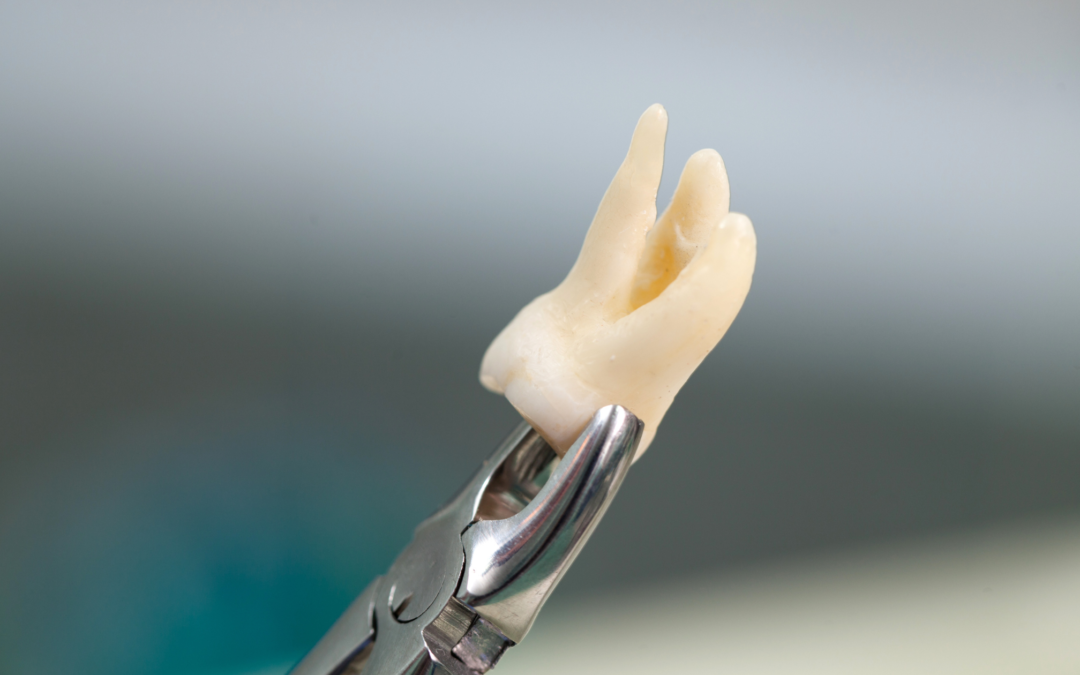
An erupted wisdom tooth has fully broken through the gum line and is visible in the mouth. These extractions are generally more straightforward. The dentist uses an instrument called an elevator to gently loosen the tooth within its socket by rocking it back and forth. Once the tooth is sufficiently loosened, forceps are used to remove it in one piece. The socket is then cleaned and, if needed, sutured closed.
The whole process for a single erupted tooth often takes only a few minutes once the area is numb.
Extracting an Impacted Wisdom Tooth
Impacted wisdom teeth require a more involved technique. Because the tooth is either partially or fully trapped beneath the gum tissue or bone, additional steps are needed to access it.
The dentist first makes a small incision in the gum tissue to expose the tooth and the surrounding bone. In many cases, some bone tissue around the tooth needs to be gently removed to provide access. The tooth itself is often sectioned, meaning it is divided into two or more smaller pieces. This is done because removing the tooth in pieces requires less force and reduces the risk of damage to surrounding structures.
Once all sections are removed, the socket is thoroughly cleaned to remove any debris or tissue. The gum is then sutured closed. Sutures may be dissolvable, which break down on their own over one to two weeks, or they may need to be removed at a follow-up appointment.
Impaction Positions and Why They Matter
Wisdom teeth can be impacted in several different ways. A mesial impaction means the tooth is angled forward toward the front of the mouth. This is the most common type. A distal impaction means the tooth tilts toward the back. A horizontal impaction means the tooth lies completely on its side, pointing directly into the adjacent molar root. A vertical impaction means the tooth is positioned normally but simply cannot break through the bone or gum.
Each position affects the complexity of the extraction, the technique used, and the expected recovery. Horizontal impactions tend to be the most involved, while vertical impactions close to the surface are often easier to access.
Your X-rays will reveal exactly what your dental team is working with before they begin.
What You Will Feel During the Procedure
Patients often worry most about pain during wisdom teeth extractions, which is completely understandable. With proper anaesthesia, the procedure should not be painful. What you will feel is pressure, movement, and occasionally a vibration or cracking sensation as the tooth is sectioned or removed. These sensations can feel intense even though no pain is involved, and it helps to understand that distinction ahead of time.
If at any point during the procedure you feel sharp pain rather than pressure, raise your hand to signal your dental team. Additional anaesthetic can be administered. You should never feel you have to push through sharp discomfort.
The sounds of the procedure, particularly the use of a drill or the feeling of pressure during tooth removal, can be unsettling. Many patients find it helpful to listen to music through earbuds during the appointment. Do not hesitate to ask your dental team if this is an option.
How Long Does the Procedure Take?
Procedure time varies depending on how many teeth are being removed and the complexity of each extraction. A single erupted tooth may take as little as 10 to 20 minutes. A full set of four impacted wisdom teeth can take 45 minutes to an hour or more. Your dental team will give you an estimated time frame during the consultation so you can plan accordingly.
Step Five: Immediately After the Extraction
Once the procedure is complete, gauze pads are placed over the extraction sites. You will be asked to bite down gently and maintain pressure for 30 to 45 minutes. This helps control bleeding and supports clot formation. The blood clot that forms in each socket is critical for healing. Protecting it in the first 24 to 48 hours is one of the most important parts of recovery.
Before you leave the office, your dental team will review aftercare instructions with you in detail. These typically include avoiding rinsing, spitting, or using straws for the first 24 hours, eating soft foods for several days, taking prescribed or recommended pain medication as directed, and watching for signs of dry socket or infection.
At Westney North Dental in Ajax, we make sure every patient leaves with a clear written summary of their aftercare instructions so nothing is forgotten.
Booking Your Wisdom Teeth Consultation in Ajax
If you are experiencing pain at the back of your mouth, notice swelling around your jaw, or have been told your wisdom teeth need monitoring, a consultation is the right next step. Westney North Dental is located at 201 Williamson Drive West in Ajax and is open Monday through Saturday with extended evening hours on Tuesday, Wednesday, and Thursday to accommodate busy schedules.
Wisdom teeth extractions are one of the most routine oral surgery procedures in dentistry. With the right preparation and a skilled dental team, most patients are surprised by how manageable the experience actually is.
Call us at 905-683-4500, email [email protected], or visit our website to book your appointment. We are here to guide you through every step of the process.
Recent Comments