
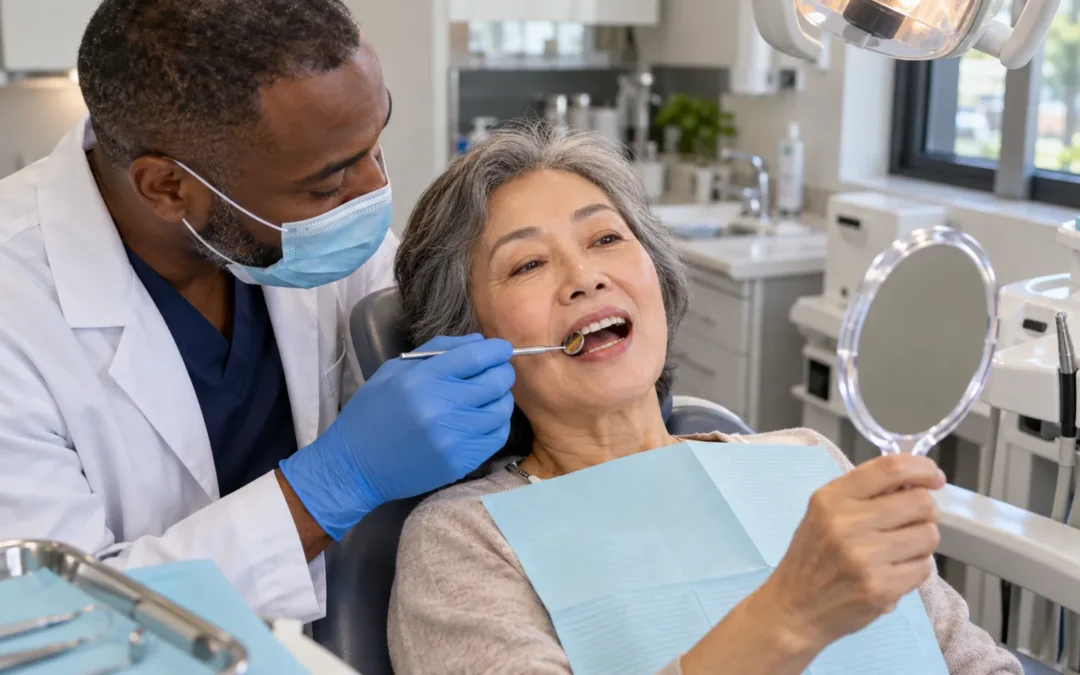
A missing tooth from years ago can still be worth assessing for an implant. The length of time you have lived with the gap does not, on its own, determine eligibility. What matters is the condition of the area now: the bone, gums, neighbouring teeth, bite and your general health.
You may have managed without the tooth for a long time and only recently started considering a replacement. Perhaps food gets caught in the space, you are unhappy with a removable appliance or you simply want to understand your options. Those are useful reasons to book a conversation, even if you are not ready to choose treatment.
Westney North Dental offers dental implants in Ajax. An assessment of an old gap looks at what would be needed to restore that particular area, rather than treating the years since tooth loss as a pass-or-fail test.
Does waiting years rule out a dental implant?
No, waiting years does not automatically rule out an implant. It may affect the complexity of planning, but the dentist needs current findings before explaining whether an implant is a reasonable choice.
There are many reasons people delay replacement: cost, health concerns, uncertainty about surgery or simply having other priorities. You can explain those reasons if they still affect your decision. The consultation should help you understand the present choices, including options that may involve different costs or levels of treatment.
An implant replaces a tooth root and supports a replacement tooth or other restoration. The Canadian Dental Association’s information on dental implants describes the importance of evaluating the supporting tissues and overall health before proceeding. The visible gap is only one part of that assessment.
If a dentist discussed implants with you years ago, bring that history, but expect the plan to be reviewed. An earlier recommendation may no longer fit the same way, and an earlier obstacle may deserve a fresh discussion. Neither possibility can be settled by counting years or comparing your situation with someone else’s experience.
How the gap and surrounding teeth may have changed
An older gap may have changed in width, shape or relationship to the teeth around it. The dentist checks these details because the replacement needs room to fit and function, not merely fill a visible opening.
Teeth beside a space can shift, and the opposing tooth may also affect the available room. The bone ridge and gum contour can change after tooth loss. These possibilities do not occur to the same extent in every person, so estimates based only on elapsed time are not reliable.
Think about what has changed in daily use. Do you avoid a food you once ate comfortably? Has a partial denture started moving differently? Is cleaning around the space awkward? Bring those observations to the appointment without trying to decide which anatomical change caused them.
It can help to distinguish the gap itself from the rest of your mouth. A missing back tooth may be your main concern, while another tooth or the gums need attention before replacement planning can progress. Westney North’s information about preventive dental care in Ajax provides context for keeping the surrounding teeth and gums under review.
What an implant assessment reviews
The assessment reviews whether an implant-supported replacement could be planned appropriately at the site and maintained afterward. That includes the supporting tissues, nearby anatomy, dental history, health considerations and the result you hope to achieve.
Westney North’s implant service information describes a consultation that includes medical history, medicines and bone quantity and quality. The American Academy of Periodontology’s implant overview also emphasizes an individualized plan and ongoing care.
Before your visit, gather:
- A current list of medicines and relevant health conditions.
- An approximate date and reason for the tooth’s removal or loss.
- Details of previous grafting or other treatment in that area, if known.
- Information about an existing bridge, denture or other replacement.
- The concerns you want addressed, such as chewing, appearance or cleaning.
- Any earlier records the office asks you to arrange for transfer.
Ask what the examination and images can establish. A dentist may need different views to assess the bone and nearby structures, and additional imaging is chosen according to the clinical question. A phone description or photograph cannot confirm suitability.
If treatment involves more than one provider, ask who will coordinate the plan. Knowing who handles assessment, surgery, the final restoration and follow-up can prevent confusion later. You should also understand what remains undecided at the end of the first appointment.
When additional treatment may be considered
Additional treatment may be needed when the site or surrounding mouth is not ready for the proposed replacement. It is considered for a specific reason, not as an automatic consequence of having an older gap.
The dentist may discuss addressing active gum disease, treating other teeth or creating appropriate space. In some cases, bone-related treatment may be considered. Ask what the proposed step would change and whether another replacement approach would avoid that step at an acceptable trade-off.
If grafting comes up, ask why the current bone is unsuitable for the plan and what the next decision will depend on. “A graft may be possible” is different from a guarantee that an implant can be placed successfully afterward. The location, health factors and intended restoration all belong in that conversation.
Also ask how preparation affects the overall schedule. An estimate should distinguish active treatment visits from healing and reassessment. If you need a temporary tooth or want to keep using an existing appliance, discuss that before assuming it will fit throughout the process.
The FDA’s patient guide to dental implants recommends discussing individual benefits and risks. Implant treatment can have complications, and continued care is necessary. Understanding those limits helps you compare a realistic plan with the alternatives.
Comparing implants with other replacement choices
Compare replacements by how they would work in your mouth and daily routine. A bridge, partial denture or implant-supported option may each raise different questions about support, cleaning, surgery, maintenance and cost.
For example, someone replacing one tooth between two other teeth faces a different decision from someone missing several teeth at the back. The condition of the remaining teeth matters. So does whether you want a fixed replacement, how you manage cleaning and whether surgery is acceptable to you.
Westney North’s article on partial dentures versus dental implants offers a starting point for comparison. At your appointment, ask the dentist to relate those differences to the findings in your mouth rather than choose from a general list of advantages.
If you already wear a partial denture, bring it when requested and explain the specific problem. “It lifts when I chew on this side” gives the discussion a clearer purpose than “I want something better.” There may be several ways to address a concern, and the most extensive treatment is not automatically the right choice.
You can also ask about the implications of continuing without replacement. That is a clinical discussion about your own bite and function, rather than an assumption that every gap must receive the same treatment immediately.
Questions to ask about a long-standing gap
Ask questions that connect the current findings to the proposed steps and their trade-offs. This helps you separate what is necessary from what is optional and understand where uncertainty remains.
Consider bringing this list:
- What does the examination show about the gap and neighbouring teeth?
- Which replacement options are clinically reasonable for me?
- What would need to happen before an implant could be placed?
- What are the risks of the proposed approach in my situation?
- What costs and follow-up visits should I plan for?
- How would I clean and maintain the final replacement?
Mention practical constraints early, including travel, caregiving, work schedules or concerns about affordability. Ask for an estimate that makes the scope clear and identifies items that may depend on further findings. A treatment name alone does not tell you whether the assessment, preparatory work and final tooth are all included.
Before leaving, confirm the next action. It might be arranging records, obtaining further information, treating an existing problem or returning to discuss alternatives. A useful consultation does not require an immediate commitment to surgery.
Frequently Asked Questions
Is there a fixed deadline for replacing a missing tooth?
No universal cutoff applies to every patient. Changes can occur after tooth loss, so a current assessment is helpful even if you are undecided. Ask how waiting longer might affect the options in your case.
Does everyone who waited need a bone graft?
No. The need depends on the site and the proposed treatment. A dentist cannot determine it from the age of the gap alone, and grafting is not appropriate or necessary for every person.
Can teeth move into an old gap?
Yes, movement is possible, but its extent varies. The dentist checks the space and bite to see whether any changes affect replacement planning. A narrowed-looking gap does not tell you the whole answer.
Can I replace more than one missing tooth?
There may be several ways to replace multiple teeth. Ask which designs suit the number and position of the gaps, the remaining teeth and your preferences. Each missing tooth does not necessarily require its own implant.
What if an implant is not suitable?
You can still discuss other replacement or management options. Ask the dentist to explain why an implant is unsuitable and how the alternatives would address your main concern.
Discuss Your Questions With Westney North Dental
Westney North Dental is at 201 Williamson Drive West in Ajax. To explore an older missing-tooth space, contact Westney North Dental and describe what you would like to improve. A current assessment can turn a long-postponed question into a clearer set of choices.
Recent Comments